Overview
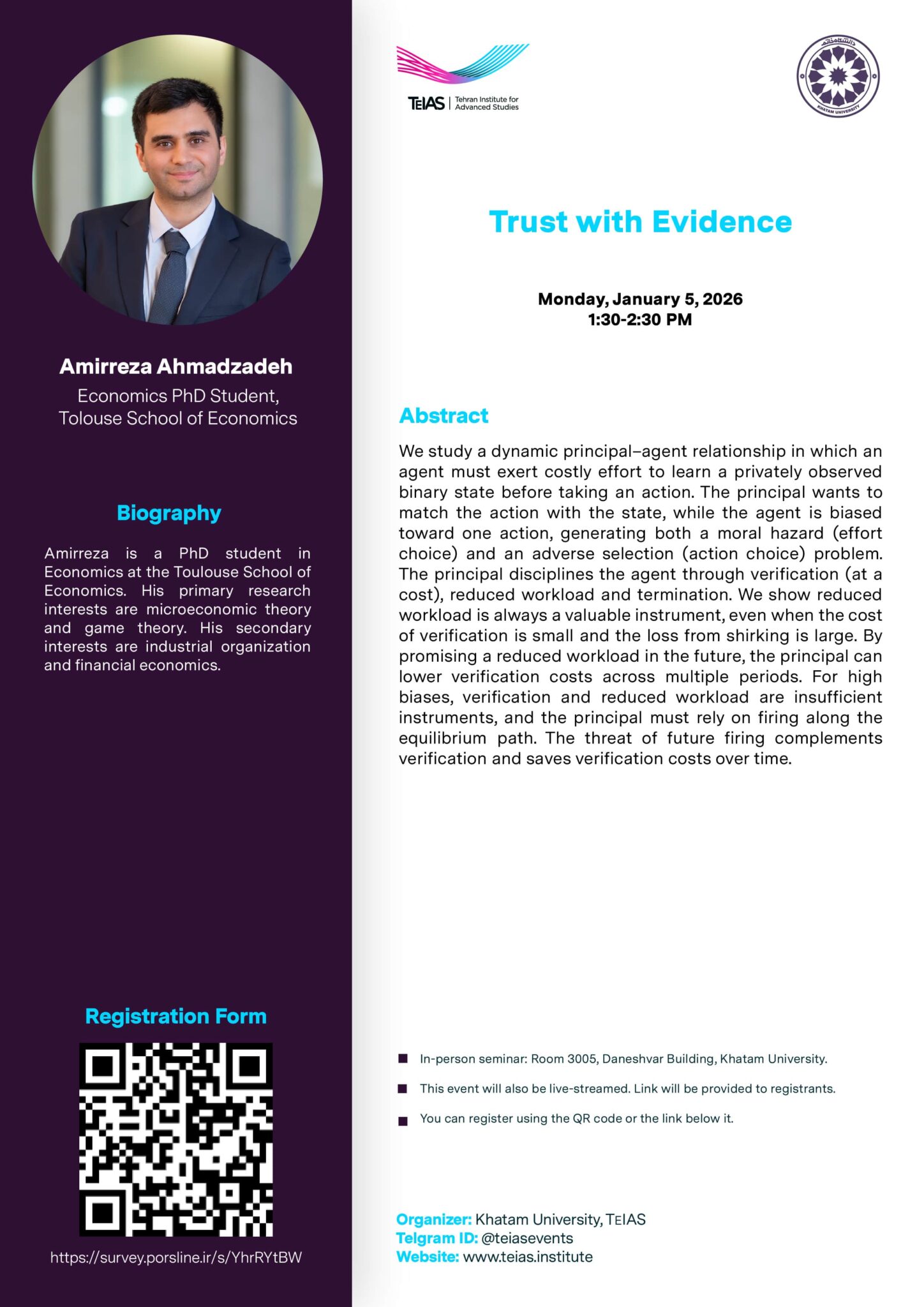
We study a dynamic principal–agent relationship in which an
agent must exert costly effort to learn a privately observed
binary state before taking an action. The principal wants to
match the action with the state, while the agent is biased
toward one action, generating both a moral hazard (effort
choice) and an adverse selection (action choice) problem.
The principal disciplines the agent through verification (at a
cost), reduced workload and termination. We show reduced
workload is always a valuable instrument, even when the cost
of verification is small and the loss from shirking is large. By
promising a reduced workload in the future, the principal can
lower verification costs across multiple periods. For high
biases, verification and reduced workload are insufficient
instruments, and the principal must rely on firing along the
equilibrium path. The threat of future firing complements
verification and saves verification costs over time.